
What Is Trauma Clearing? Understanding Trauma, Emotional Patterns and Moving Forward
Updated: Aug 20

What Is Trauma Clearing? Understanding Trauma, Emotional Patterns and Moving Forward
Sometimes people come to me after trying several different approaches to their emotional wellbeing. They understand their past. They may have talked about what happened many times. They may even understand why they behave or feel the way they do.
And yet something still feels stuck.
A memory can still produce a powerful emotional reaction. Anxiety can seemingly appear from nowhere. The same patterns can repeat in relationships, confidence or everyday life despite a genuine desire to change them.
My approach to Trauma Clearing begins with a simple idea: rather than concentrating only on the story of what happened, we explore the emotional response that remains connected to it.
The aim isn’t to erase your past. It is to explore whether the past can lose some of its power over your present.
I’ve worked with people who had previously tried other approaches without achieving the change they were looking for. In some cases, I have observed significant shifts through one or two Trauma Clearing sessions.
Everyone is different, however, and individual outcomes cannot be guaranteed.
What I can offer is a process, my experience and a willingness to explore what may be sitting beneath the surface with you.
One idea I often return to is this:
Everything serves a purpose, and our relationship with trauma does not necessarily have to remain the same forever.
What Do We Mean by Trauma?
When people hear the word “trauma”, they often imagine an obviously catastrophic event.
War, violence, sexual abuse, a serious accident or bereavement.
Those experiences can certainly be traumatic, but our emotional history can also be shaped by experiences that might appear insignificant to somebody looking from the outside.
Imagine a very young child crying desperately in a cot and nobody comes.
To an adult, that might look like a relatively ordinary moment.
To the child experiencing it, however, there may be fear, distress or a sense of abandonment.
Experiences throughout life can influence the emotional associations and protective patterns we develop.
Later, those patterns may appear in ways we don’t immediately connect with our past: perhaps overthinking, self-sabotage, unhealthy coping behaviours, difficulty trusting, problems sleeping or powerful emotional reactions to particular situations.
Difficult emotions and symptoms can have many possible causes and deserve appropriate professional assessment. Within my own work, however, there can be value in asking:
“Is there something beneath this reaction that I haven’t resolved?”
That question is often where my work begins.
What Is Trauma Clearing?
Trauma Clearing is the name I use for the approach I practise to help a client explore the emotional response connected with difficult memories and experiences.
It is a collaborative process.
I use guided questioning to help the client identify what feels relevant, while allowing their own mind and emotional responses to guide what emerges.
When an appropriate memory or experience comes forward, we work with the feelings associated with it rather than simply analysing the story intellectually.
Breathing techniques are also incorporated into the process.
My intention is to help the client explore whether the negative emotional response associated with that memory can reduce or change.
Some clients subsequently describe the memory as feeling more distant, less vivid or less emotionally charged.
The memory itself remains part of your history; what we are exploring is whether your relationship with it can change.
You can learn more about my Trauma Clearing service and current session prices if you’d like to understand the practical side of working with me.
You Don’t Have to Tell Me Everything
This is particularly important.
You remain in control of what you disclose.
I’ve conducted sessions where a client has privately focused on a memory without telling me the details of what happened.
They know what they’re working with. I don’t necessarily need to know the entire story.
Where several different experiences need exploring, having some additional context can sometimes help me guide the process. But somebody should never feel pressured to disclose intimate details simply because they’re having a session with me.
We establish those boundaries together. However, most people feel comfortable in the end to share their experiences after we have cleared them.
Do You Have to Relive Your Trauma?
This is one of the understandable concerns people have before contacting me.
Trauma Clearing can involve connecting with feelings associated with a difficult memory. In my approach, recognising the emotional response is an important part of exploring whether that response can change.
I sometimes describe this very simply as:
“You have to feel it in order to heal it.”
That exploration takes place with consent and at a pace appropriate to the individual.
This is one reason every new client starts with a consultation.
What Happens During a Trauma Clearing Session?
My Trauma Clearing sessions are generally conducted online using Zoom.
I’ve found online sessions particularly useful because clients don’t need to travel long distances and can participate from a familiar, comfortable environment.
Before beginning the clearing process, we establish your intention.
What would you like to explore? What feels important? What would you like to be different?
There is no need to enter a hypnotic trance, and there isn’t an elaborate preparation process (This ultimately means shorter sessions than traditional hypnotherapy session, depending on how many clearings are conducted within a session).
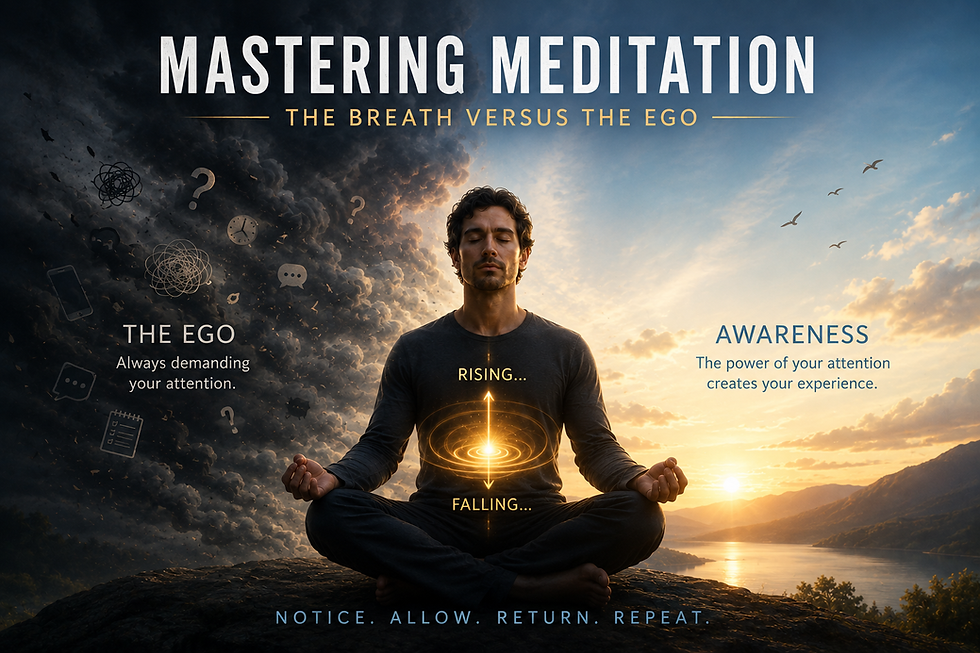
From there, I use guided questions and the Trauma Clearing process to explore what emerges. Using the breath as the key tool to clear any negative emotions for what surfaces in the clients conscious mind.
I see myself as the facilitator rather than the person responsible for “fixing” another human being.
A principle that has become increasingly important in my work is:
All meaningful change requires participation from the person seeking it.
I can provide the questions, structure, experience and support, but you bring the willingness. That’s the fuel in the tank.
How Do We Know Whether Something Has Changed?
Toward the end of a session, we can revisit the memory or situation we have been working with.
I may ask the client to recall it again and notice what happens.
Can they recreate the original feeling? Does it have the same intensity? Has your view of it changed?
In my own experience within clients' sessions, many clients have reported being unable to recreate the original emotional response, or finding that its intensity has substantially reduced.
If you’d like another perspective rather than relying solely on my description of the process, you can read what previous clients have said about working with me.
That immediate experience isn’t where I consider the process finished, though.
I believe processing time matters.
For that reason, I generally allow around two weeks before following up.
During this period, I encourage clients to be mindful of subtle emotional changes. They might notice that something which previously triggered them produces a different response, or they may become aware of another layer that needs attention.
Where appropriate, I may encourage journaling.
I am particularly interested in the power of asking yourself the right question in the run up yo your session and as part of your own healing journey after working with me.
Rather than immediately demanding an answer, sometimes simply sitting with a useful question can reveal something that wasn’t previously obvious.
Asking the right questions will always give you the right answers that you need to move forward.
Who Is Trauma Clearing For?
Short answer, those that are actively looking for help.
Nervousness is extremely common when approaching something deeply personal.
The people who tend to engage best with my approach are those who recognise that something isn’t working for them anymore and are open to exploring what may sit beneath it.
One of the more challenging concepts I sometimes discuss is identity.
After living with an experience for many years, our understanding of ourselves can become intertwined with what happened.
Moving forward can therefore involve being willing to question an old identity or protective pattern.
This is about asking whether a pattern that once served a protective purpose is still serving you today.
If somebody struggles to engage with the process, I don’t see that as failure.
It may simply mean this isn’t the right time.
Sometimes a person needs more time to reflect, ask themselves questions and understand what they’re actually ready to change.
They are welcome to return when that changes.
Breaking Repeating Emotional Patterns
One way I think about trauma is through patterns.
Human beings naturally develop protective responses based on experience. Sometimes those responses remain active long after the original circumstances have changed.
Something happens, we react, the reaction becomes familiar, and eventually the pattern can feel automatic.
When we change our relationship with the emotional experience beneath a pattern, there may be more space to respond differently.
Some people might notice greater patience, more compassion, less immediate anger, more understanding, or simply a pause between something happening and their emotional reaction to it.
That pause can be enormously valuable.
Because changing the past isn’t possible, changing the way we relate to the past may be.
My Philosophy: Does Trauma Have a Purpose?
This is a subject I approach carefully.
Painful experiences do not need to be justified or given a purpose.
What I have observed, however, is that some people eventually discover something about themselves through adversity that they couldn’t see while they were in the middle of it.
That might be resilience, boundaries, compassion, self-respect or the determination not to repeat a pattern in the next generation.
For people who hold a more spiritual worldview, that may be interpreted as discovering a lesson or purpose within an experience.
Others may simply call it personal growth.
What’s important is finding an understanding that is useful to the individual. Find the power within your pain.
Trauma Clearing Versus Hypnotherapy
I’m a qualified hypnotherapist, but I increasingly tend to offer Trauma Clearing as my starting approach.
One reason is its simplicity.
It works naturally online, doesn’t require a hypnotic trance and allows us to begin exploring underlying emotional material through guided questioning.
I still offer Trauma Resolve Hypnotherapy.
Some people are particularly interested in hypnosis or simply feel more drawn to that experience. For those clients, hypnotherapy may be the approach we agree upon.
The aim is to find an approach that fits the individual and one they are comfortable with.
That’s something we can discuss during the initial consultation.
This Sounds Like Counselling and Talking Therapies, are There Differences?
Some people arrive at my practice after counselling or another form of therapy and tell me that although understanding and discussing their experiences was valuable, they still feel an emotional response they want to address.
My approach is different in emphasis.
Rather than requiring you to repeatedly tell me every detail of the story, we can focus specifically on the feelings and responses associated with a relevant memory. Other Modalities may offer some support but fall short of this remarkable technique.
Different people need different forms of support, and established trauma treatments include approaches such as trauma-focused cognitive behavioural therapy and EMDR.
My work offers another approach for people who feel it resonates with them and should not replace medical or psychological care where that care is needed.
Where Did My Approach Come From?
My own work with Trauma Clearing began around four years ago after David Ian Rogers kindly shared the foundations of his technique with me.
David made himself available when I had questions and needed support.
I want to be transparent about that relationship: I don’t present this as though I completed a formal certification programme with David.
What he gave me was a foundation.
The approach I use today has subsequently developed through years of working with individual clients.
That’s something I believe happens with any practical technique.
Every client teaches you something.
Experience teaches you who is likely to engage well with a process, when to proceed, when to slow down and when somebody simply isn’t ready.
I’ve also incorporated elements informed by my various courses in Hypnotherapy, my wider practice and insights gained from other mentors over the years, including people with experience of NLP-informed techniques.
I also carry professional insurance for my practice.
You can learn more about me, my background and my approach on my About Me page.
What Does “Freedom From Trauma” Mean to Me?
For me, freedom from trauma is about the possibility of a memory existing without continuing to produce the same unwanted emotional reaction. Having a better understanding of the ego and learning a new perspective of our journey.
Some clients I’ve worked with have described previously difficult memories as becoming foggier, more distant or simply harder to connect with emotionally after the clearing work.
Others have described being able to remember what happened while feeling very differently about it.
Again, you can read experiences shared by previous clients if you’d like to hear their perspectives in their own words.
The memory remains part of their life story, but it may no longer need to dictate the next chapter.
That is what I mean when I talk about freedom.
The First Step Is a Free Conversation
If you’ve read this far because something in your own life feels unresolved, you don’t need to decide immediately whether Trauma Clearing is right for you.
That’s what the initial consultation is for.
My consultations are completely free and usually last around 15 to 20 minutes by telephone.
We’ll talk about what’s bringing you to me and I’ll explain the approaches I offer. Based on our conversation, I’ll give you my professional view about which approach may be appropriate, while you remain part of that decision.
Most importantly, you can ask questions.
There is no obligation to book a paid session.
Rapport and timing matter. If something doesn’t feel right, you don’t have to continue.
And if you do decide that you’re ready, we can arrange a suitable date and time for your session.
Being nervous doesn’t mean you’re not ready.
Almost everyone I’ve worked with has experienced some nervousness before doing something deeply personal.
Sometimes the important question isn’t, “Am I nervous?” It’s, “Am I willing to explore what could be different?”
If the answer is yes, you can explore my services and prices or contact me to arrange your free 15–20 minute consultation.
A Note About Trauma Clearing
Trauma Clearing as described here reflects my own professional approach and experience. It should not be interpreted as a medically established treatment or a guarantee of a particular outcome.
It is not a substitute for diagnosis, medical treatment, psychotherapy or emergency mental-health support. If you are experiencing significant mental-health symptoms, PTSD, thoughts of harming yourself or others, or concerns about your physical health, please seek appropriately qualified medical or mental-health support.


Comments